
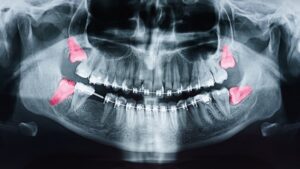
Wisdom teeth are the last set of molars to develop, typically emerging between the ages of 17 and 25. While some people experience no issues when their wisdom teeth come in, many others develop discomfort or pain. Wisdom tooth pain can range from mild soreness to severe, persistent discomfort that affects daily activities.
Understanding the common causes of wisdom tooth pain can help you recognize when it’s time to seek professional dental care.
Impacted Wisdom Teeth
One of the most common causes of wisdom tooth pain is impaction. An impacted wisdom tooth does not have enough room to fully erupt through the gums and become properly positioned.
Instead, the tooth may become trapped beneath the gum tissue or jawbone. Some impacted wisdom teeth grow at an angle, pushing against neighboring teeth. This pressure can cause pain, swelling, jaw stiffness, and discomfort when chewing.
Impacted wisdom teeth often require extraction to prevent further complications.
Gum Inflammation and Infection
When wisdom teeth only partially emerge through the gums, they can create a flap of gum tissue that traps food particles and bacteria. This condition, known as pericoronitis, can lead to inflammation and infection around the tooth.
Symptoms may include:
- Tender or swollen gums.
- Redness around the tooth.
- Bad breath.
- Difficulty opening the mouth.
- Pain when chewing.
Without treatment, the infection can worsen and spread to surrounding tissues.
Tooth Decay
Wisdom teeth are located at the very back of the mouth, making them difficult to clean properly. As a result, they are more susceptible to plaque buildup and cavities.
A cavity in a wisdom tooth can cause sensitivity, aching, and sharp pain. In some cases, decay may extend deep into the tooth and affect the nerve, leading to more significant discomfort and potential infection.
Damage to Nearby Teeth
A wisdom tooth that erupts at an improper angle may press against the adjacent molar. This pressure can damage the neighboring tooth, contribute to crowding, or create areas where bacteria accumulate.
As the surrounding teeth and gums become irritated, pain may develop not only around the wisdom tooth but also in nearby areas of the mouth.
When to See Your Dentist
Occasional mild soreness during wisdom tooth eruption isn’t uncommon. However, persistent pain, swelling, difficulty chewing, jaw stiffness, or signs of infection should never be ignored.
Your dentist can evaluate the position of your wisdom teeth using an examination and X-rays to determine whether treatment is necessary.
Wisdom tooth pain is often a sign that something isn’t functioning properly. Whether the cause is impaction, infection, decay, or pressure on nearby teeth, early evaluation can help prevent more serious complications.
About the Author
Dr. Robert C. Fromuth earned his Doctor of Dental Surgery with honors from the University of North Carolina at Chapel Hill before completing a General Practice Residency at the Lehigh Valley Hospital in Pennsylvania. Since then, he has completed the core curriculum at the prestigious Pankey Institute for Advanced Dental Education and is currently a member of the American Dental Association and the New Hampshire Dental Society. If you need your wisdom teeth removed, book online or call our Manchester office at (603) 644-3368.